Category: Tech

  • Why the NHS App Is Becoming Britain’s Most Important Digital Health Tool, and Where It Still Falls Short

    Why the NHS App Is Becoming Britain’s Most Important Digital Health Tool, and Where It Still Falls Short

    The NHS App started life as a fairly modest tool. Book a GP appointment, order a repeat prescription, check your NHS number. For a lot of people, that’s still all they think it does. But over the past couple of years, its scope has expanded considerably, and in 2026 it’s increasingly the central point of contact between millions of patients and their health information. I’ve been watching this shift closely, and my honest assessment is that the app is genuinely useful in ways most people don’t realise, but it also has real limitations that nobody in NHS England seems keen to advertise.
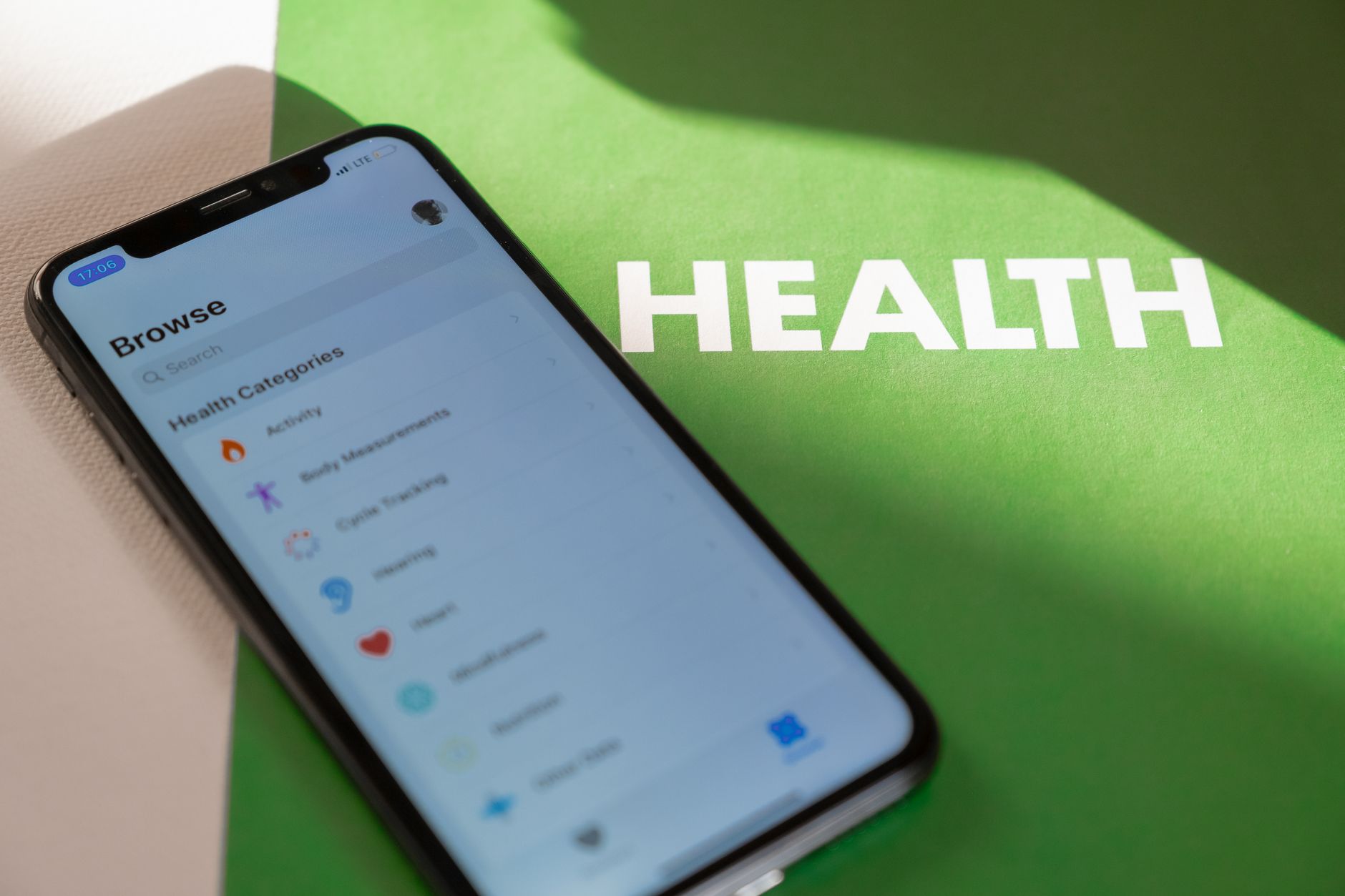
    Person viewing NHS App digital health record on a smartphone at home
    Photo by Polina Zimmerman on Pexels

    As of early 2026, the NHS App has over 35 million registered users in England, making it one of the most widely adopted health apps anywhere in Europe. That’s not a trivial number. It now gives patients access to their GP health record, including test results, medications, allergies, immunisation history, and in some cases consultation notes. For those connected to GP practices that have enabled detailed coded records, the app can show years of clinical history in a way that was simply impossible for patients to access a decade ago.

    What the NHS App actually does now

    Beyond appointment booking, the app serves as a gateway to the NHS login system, which means it also connects to services like organ donation registration, proxy access for carers managing a relative’s health, and the NHS 111 online service. Since the rollout of the Federated Data Platform and expanded Summary Care Record access, some patients can now see a richer dataset than before, including information shared between hospitals and their GP practice.

    The prescription service is arguably where the app delivers most reliably. Ordering repeat prescriptions, nominating a pharmacy, and tracking dispatch are all smoother than they were even 18 months ago. If you’ve spent time on hold to a GP receptionist just to request your metformin or blood pressure tablets, the app’s repeat prescription function is a genuine improvement to daily life. I’d go further and say it’s probably saved the NHS millions of hours in administrative time.

    Referral tracking is newer and patchier, but it’s there. Patients waiting for outpatient appointments at certain NHS trusts can now see estimated waiting times and sometimes receive digital letters through the app rather than via Royal Mail. The ambition, as NHS England has laid out in its digital strategy, is for the app to become the single front door for most non-emergency NHS contact.

    GP reviewing an NHS App digital health record with a patient during a consultation
    Photo by Cedric Fauntleroy on Pexels

    Where the NHS App still falls short

    Here’s where I want to be straight with you, because the cheerful NHS press releases don’t always do this part.

    Record completeness varies wildly depending on your GP practice. Not every practice has enabled full medical record access, and even those that have may show gaps, particularly around historical records that were never coded digitally. If you’re looking at your app and seeing only the last 18 months of test results, that’s not a bug exactly; it’s a consequence of how NHS data has historically been structured. Primary care was largely paper-based well into the 2000s in many areas, and digitising those older records comprehensively hasn’t happened.

    Mental health information is another significant gap. In most cases, records held by community mental health teams, IAPT services, and inpatient psychiatric units do not appear in the NHS App. This isn’t accidental. There are genuine clinical and ethical reasons why mental health records are handled differently, but it means the app can give patients a misleadingly incomplete picture of their own health. A person managing depression alongside a physical condition may see their diabetes medication but nothing about their psychological care.

    Interoperability between secondary and primary care remains limited. If you’ve had a hospital procedure, the discharge summary may or may not show up in your GP record, and therefore may or may not appear in the app. NHS England is working on this through its Unified Patient Record programme, but in 2026 the experience is still inconsistent. Some patients at trusts using the Epic or EMIS systems have better cross-setting visibility; others have almost none.

    The app also requires a mobile or internet-connected device and a verified NHS login. For older patients, those with disabilities affecting digital access, and people without a smartphone, the app simply isn’t an option. The NHS login service has made some efforts to broaden access through photo ID verification and telephone-based support, but digital exclusion remains a genuine concern. Focusing too heavily on the app as the primary NHS access point risks leaving behind the patients who often have the greatest health needs.

    Privacy and data: what patients are actually agreeing to

    Using the NHS App involves sharing your data with NHS England and, through certain features, with partner organisations. The NHS login requires identity verification, and usage data is collected. Most of this is handled under existing NHS data governance frameworks, but patients deserve to understand what they’re signing up for rather than tapping “agree” on a screen.

    There are also questions around the Federated Data Platform, built by Palantir, which underpins some of the data infrastructure the app now connects to. NHS England has insisted patient data is protected and not sold commercially, but the arrangement has attracted scrutiny from patient groups and privacy researchers. If this is a concern for you, the growing trend of institutions being held to higher transparency standards applies in the health context too, and you can opt out of certain NHS data uses via the national data opt-out, accessible through the app itself.

    How to get more from the app in 2026

    My practical advice: start by checking what level of record access your GP practice offers. Go to the “Health Record” section of the app, if you can only see medication and allergies, contact your surgery and ask about enabling detailed coded record access. Most practices can do this for patients who request it; many just haven’t proactively promoted it.

    Set up proxy access if you manage care for a parent or child. This is one of the most underused features, it lets you view and manage another person’s NHS account with their consent, which is particularly useful for parents of teenagers or adult children supporting elderly relatives. The process for setting this up is still more admin-heavy than it should be, but it works.

    If you’re a healthcare professional, content creator, or patient advocate sharing NHS digital health information online, it’s worth thinking about how you organise your own digital presence. Plenty of health accounts are now exploring link in bio tool options to point followers towards credible NHS guidance rather than scattering links across platforms.

    The broader picture is that the NHS App is genuinely useful, more useful than most patients currently realise, but it works best for people who are already reasonably digitally confident and registered with a forward-thinking GP practice. The gap between what the app promises and what patients in less well-resourced areas actually experience is real. This connects to a wider issue: rising demand for private GP services is partly driven by people who feel their NHS access, digital or otherwise, isn’t meeting their needs.

    NHS England’s ambition to make the app the central digital health record for every patient in England is the right direction. Getting there will require solving the interoperability problem, bringing more trusts onto compatible systems, and doing far more to support patients who struggle with digital tools. The app in 2026 is a significant step forward from where it was. It’s not yet the joined-up health record hub the NHS wants it to be.

    Frequently Asked Questions

    What health information can I see on the NHS App?

    If your GP practice has enabled full record access, you can see medications, allergies, test results, immunisation history, and in some cases consultation notes. The level of detail varies between practices, and hospital or mental health records are generally not included.

    Is the NHS App available across all of the UK?

    The NHS App is available to patients registered with a GP practice in England. Scotland, Wales, and Northern Ireland have separate digital health platforms, Scotland uses My Health, and Wales has the NHS Wales App, which offers different functionality.

    Is my data safe on the NHS App?

    The NHS App is operated by NHS England and is subject to UK data protection law under the UK GDPR. You can opt out of certain secondary uses of your data through the national data opt-out setting within the app, which does not affect your direct care.

  • Why UX Design Failures in Everyday Apps Are Costing British Users Time, Money and Patience

    Why UX Design Failures in Everyday Apps Are Costing British Users Time, Money and Patience

    There is a moment every British person knows: you open an app to do something straightforward, and five minutes later you are still trying to find the right screen, half convinced you have done it wrong. Whether it is logging into your bank to check a balance, booking a GP appointment through an NHS portal, or renewing a government licence online, digital interface design in the UK has a problem. Not an obscure, technical problem. A daily, maddening one that costs people real time and, sometimes, real money.

    I have spent a fair amount of time thinking about this, partly because I seem to spend an unreasonable portion of my life fighting with apps that should be simple. And I am not alone. Research published by the Nielsen Norman Group consistently shows that poor usability leads users to abandon tasks, make errors, or simply give up entirely. When those tasks involve your finances or your healthcare, giving up is not a neutral outcome.

    Woman frustrated by poor digital interface design on a smartphone app
    Photo by Alex Green on Pexels

    Where British apps are letting users down most

    Banking apps are probably the most visible offender. UK fintech has a reputation for being ahead of the curve, Monzo and Starling both built their names partly on clean, intuitive design. But the high street banks have been slower. Anyone who has tried to set up a new payee through a legacy Barclays or HSBC web interface knows the peculiar frustration of being asked to confirm, then re-confirm, then call a number, then receive a code, then start again because the session timed out. The security rationale is valid. The implementation often is not.

    NHS digital services are where the stakes are highest, though. The NHS App has improved substantially since 2022, but GP surgery portals remain wildly inconsistent, each practice seems to run a different system, with different logic. Patients trying to request a repeat prescription or book an appointment can encounter dropdown menus with no obvious hierarchy, error messages that do not explain what went wrong, and confirmation screens that look identical to error screens. I spoke to a friend who works as a district nurse and she told me half her patients over sixty simply stop using the portal after one bad experience and call the surgery instead, adding to the phone queue both sides are trying to reduce. That is a systems failure dressed up as a user behaviour problem.

    Why bad digital interface design is never just a niche issue

    One of the more instructive places to study interface failure is in entertainment software, where the stakes are lower but the design problems are often clearer to see. The worst video game menus are frequently cited by UX professionals as case studies precisely because games have no obligation to keep you using them, if the menu is confusing, you simply stop playing. When people still catalogue specific interfaces as disasters years after release, it tells you something about how deep the problem runs. The same cognitive friction that makes a player abandon a title makes a patient abandon a healthcare portal or a customer abandon a checkout.

    The core principles at stake are the same regardless of context: discoverability, feedback, consistency, and error prevention. A button that does not look like a button fails on discoverability. A process that completes without telling you it has succeeded fails on feedback. An app that works differently across its own screens fails on consistency. These are not exotic requirements. They are the basics, and yet they are violated constantly in UK public and commercial services alike.

    Close-up of a confusing digital interface design on a mobile banking app
    Photo by Julio Lopez on Pexels

    Government digital services: a mixed picture

    The Government Digital Service (GDS) deserves credit for the work done on GOV.UK. The main website is genuinely one of the better-designed government portals in Europe, built around a clear design system that prioritises plain language and logical flow. The problem is that the GDS standards do not automatically apply to every government-adjacent system. HMRC’s own interfaces sit in a different category entirely. Anyone who has tried to navigate a self-assessment return, check their tax code, or use the Business Tax Account knows that the experience can feel like it was designed in a different decade, because parts of it were. The recent HMRC PAYE tax code changes have made the need for clear, accessible digital communication more urgent; if users cannot easily check or challenge their code online, errors go unnoticed until they become expensive.

    DVLA services have improved, but inconsistently. Renewing a driving licence online is now fairly painless. Other transactions still route you through PDF forms that must be printed, filled in by hand, and posted, in 2026, for a digital-first agency. This is not a minor inconvenience. For people without a printer, or with limited mobility, or for whom English is a second language, it is a genuine barrier.

    The cost of poor UX beyond frustration

    Frustration is real, but the financial cost is underappreciated. When a banking app’s clunky design causes a user to miss a payment deadline because they could not find the right screen in time, there is a direct penalty. When an insurance renewal portal makes it near-impossible to cancel before auto-renewal, that is money leaving someone’s account that they did not intend to spend. The Consumer Duty rules introduced by the FCA in 2023 placed a legal obligation on financial firms to ensure their products deliver good outcomes for consumers, which should include the quality of the interface through which those products are accessed. I would argue most firms are still catching up to what that means in practice.

    There is also a cost-of-living dimension here. As UK workers lean more heavily on digital tools to manage money and time, the quality of those tools matters more. A household already stretched financially cannot afford to lose hours to a broken interface, or to miss a benefit entitlement because the DWP’s online claims system confused them at step three.

    What better design actually looks like

    The good news is that strong examples exist within the UK. Monzo’s in-app notifications are a frequently praised model: they tell you exactly what happened, when, and what (if anything) you need to do. The DVLA’s vehicle tax renewal service, despite the gaps I mentioned above, is genuinely fast once you are in the right place. And the NHS App, for all its inconsistencies, now handles repeat prescriptions with a clarity that would have been unthinkable five years ago.

    The pattern in every success story is the same: the design team spoke to actual users before, during, and after building the product. Not once. Repeatedly. They tested with people who are less digitally confident, not just the twenty-eight-year-old developer writing the code. And they treated a confusing user journey as a bug to be fixed rather than a training issue for the user to resolve. That shift in responsibility, from user to designer, is the whole game.

    British users in 2026 are interacting with digital services more than ever before. The expectation of basic competence is reasonable. Every app that forces a workaround, every portal that times out mid-task, and every error message that explains nothing is a small failure of public and commercial trust. Fixing digital interface design is not glamorous work. But it is important work, and the gap between what currently exists and what is genuinely achievable has never been smaller, which makes the current state of affairs harder to excuse.

  • The Small Workshop Economy: What Britain Still Actually Makes

    The Small Workshop Economy: What Britain Still Actually Makes

    The story everyone knows about British manufacturing is a story about decline. The factories closed, the work went overseas, and what was left became a heritage attraction.

    That story is roughly two-thirds true and it obscures something worth paying attention to. The UK still manufactures a great deal, ranking consistently among the world’s largest manufacturing economies by output. What changed was not whether Britain makes things. It was the size of the unit doing the making.

    British manufacturing

    The thousand-person factory largely went. The four-person workshop did not. And over the last fifteen years the four-person workshop has been handed a set of tools that changed what it is
    capable of.

    What actually changed

    Three things arrived at roughly the same time, and together they altered the arithmetic completely. Machine tools got cheap. A CNC router, a laser cutter or a decent welding setup now costs what a second-hand van costs. Capability that used to require industrial capital sits in a unit on a farm.

    Distribution stopped requiring permission. This is the big one. The old bottleneck was not production, it was access. To sell a product you needed a buyer at a retail chain to agree to
    stock it, and that buyer wanted volume, margin, packaging, terms, and a reason to displace an existing supplier. Most small makers never got past it. Now a workshop can put up a Shopify store
    on a Tuesday and take an order from Aberdeen on the wednesday.

    Freight economics tilted back. Container shipping got less reliable and less cheap after 2020, and the gap between an imported unit and a British-made one narrowed on anything bulky. For heavy or awkward products, domestic production started making straightforward commercial sense again rather than being a premium positioning choice.

    Direct selling changes what gets built

    The consequence people miss is that selling direct does not just change the margin. It changes the product.

    A maker selling through retail is designing for a buyer. The buyer cares about the price point, how many fit on a pallet, and whether it will sell in volume. Feedback arrives, if at all, six months late and heavily filtered.

    A maker selling direct is designing for the person who will use it, and hears from them immediately. Every email, every return, every awkward question goes straight to the person holding the tools. That produces a specific kind of product: unusually well suited to a narrow group of people, with design decisions that would never survive a buyer’s meeting because they only make sense if you understand the customer properly.

    You see it everywhere once you start looking. Bike frame builders sizing for riders that the major brands’ size charts ignore. Small furniture workshops building for the dimensions of actual British flats rather than the showroom. Tool makers producing left-handed versions of things that have only ever been made right-handed.

    My Dungeon in Boston, Lincolnshire, is a clean example of the pattern operating in a category most people never think about as manufacturing. The workshop builds furniture that has to hold
    substantial dynamic load while also folding flat enough to store under a bed, which are two requirements that fight each other and demand real thought about frame geometry. A folding bench built in Lincolnshire exists in that form for one reason: the people buying it live in small rented flats and said so directly to the person who makes it. No retail buyer would ever have specified that. The constraint came straight from the customer, because there was nobody standing in between.

    The unglamorous economics

    None of this is a fairytale and it is worth being honest about the difficulties.

    Small workshops are brutally exposed to their own capacity. One person off sick is a production halt. Growth is genuinely hard, because the step from four people to fifteen means premises,
    employment law, insurance and management, and plenty of makers decide the extra money is not worth the change in their job description. Business rates on industrial units are punishing. Getting a sensible bank facility is close to impossible without personal guarantees.

    And direct selling means becoming a marketing operation whether you wanted to or not. A workshop that cannot get found does not survive on quality alone, and the skills involved have nothing to do with making things.

    The ones that work tend to share a pattern: a narrow product range, a specific customer they understand unusually well, a price that reflects the actual cost of British labour rather than pretending to compete with imports, and content that demonstrates competence rather than shouting.

    Why it matters

    There is a tendency to treat this sector as charming and economically irrelevant. Nice that someone still makes chairs, but not really the economy.

    That undersells it. These businesses hold skills that vanish permanently once the last person who has them retires. They keep supply chains alive for materials that would otherwise stop being produced in this country. They employ people in towns where the large employer left decades ago. And they are considerably more resilient than the model they replaced, because a hundred small workshops do not all fail at once the way one large factory does.

    Britain did not stop making things. It stopped making them in buildings you could see from the train.


    Related: how shrinking British homes became a design constraint for manufacturers, and why natural fibre came back into small-batch production.

    British manufacturing

  • How Ofcom’s Online Safety Act Enforcement Is Reshaping Social Media for UK Users

    How Ofcom’s Online Safety Act Enforcement Is Reshaping Social Media for UK Users

    Something shifted in early 2026. Scroll through social media now and the experience feels subtly different from even 12 months ago. Content that once circulated freely is being removed faster. Age-verification prompts are appearing on platforms that previously ignored them. And if you report something genuinely harmful, there is a growing chance that something actually happens. That change has a name: Ofcom Online Safety Act UK enforcement, moving from theory into practice.

    UK user reviewing social media content affected by Ofcom Online Safety Act UK enforcement

    The Online Safety Act received Royal Assent in October 2023, but it spent much of 2024 and 2025 in the background while Ofcom consulted, drafted codes of practice, and set deadlines. From the start of 2026, those deadlines began to bite. Platforms have had to submit their first illegal harms risk assessments, and Ofcom has made clear it will use its full investigatory and financial powers against those that fall short. The regulator can impose fines of up to £18 million or 10% of global annual turnover, whichever is higher. For a company like Meta, that second figure is enormous. That creates a very different set of incentives compared to the pre-Act era of voluntary content policies and vague promises.

    What platforms are actually required to do

    The Act splits platforms into categories. The largest and highest-risk services carry the heaviest duties. These include things like Meta’s Facebook and Instagram, TikTok, X (formerly Twitter), Snapchat, and YouTube. They must assess and mitigate risks from illegal content, including child sexual abuse material, terrorism content, fraud, and hate speech. They are also required to protect children from harmful but not necessarily illegal content, which covers material promoting self-harm, extreme dieting, and age-inappropriate violence.

    Smaller platforms are not off the hook either, but their obligations are lighter. User-to-user services with fewer than one million monthly UK users still have duties around illegal content, but the compliance burden scales down accordingly. Ofcom has published detailed guidance and codes of practice on its official Online Safety hub that set out exactly what each tier of service must do, and those documents are surprisingly readable if you want to understand the mechanics.

    How enforcement is visibly changing the experience

    The most immediate thing British users are noticing is age assurance. Platforms that host pornographic content now face a hard legal requirement to ensure under-18s cannot access it. Services that relied on a simple “click here to confirm you are 18” tick box have had to move towards more robust verification, whether through credit card checks, mobile network operator data, or facial age estimation tools. This is not theoretical. Several adult content platforms geo-restricted or withdrew UK access in late 2025 rather than implement the required checks.

    Content moderation on the mainstream platforms has also become noticeably more active. TikTok and Instagram, in particular, have increased the speed at which flagged content is reviewed, partly because Ofcom’s codes require platforms to have clear and functional reporting mechanisms with measurable response times. The knock-on effect is real: videos and posts that might have stayed up for days are now reviewed within hours. For creators, that brings a new set of anxieties about false positives and opaque appeals processes. For users who have been on the receiving end of harassment or targeted abuse, it is, frankly, overdue.

    There is also a transparency dimension. Platforms operating in the UK must now publish annual transparency reports covering how many pieces of content were removed, why, and what happened when users appealed. Those reports give researchers, journalists, and regulators a level of data that simply did not exist before. Whether the platforms report honestly is a separate question, but the legal obligation to report at all is significant.

    What this means if you report harmful content

    One of the most practical changes for ordinary UK users is around reporting. Previously, sending a report into the void of Meta or TikTok’s moderation queue felt like putting a message in a bottle. Under the Act, platforms must have accessible, easy-to-use reporting tools and must process reports in a timely way. They must also give users a right to appeal content removal decisions and to complain if their reports are ignored.

    Ofcom can receive complaints directly from users if they believe a platform has breached its duties. This is not a quick individual remedy (Ofcom investigates systemic failures, not individual cases), but it does mean that patterns of ignored reports can form the basis of a regulatory investigation. That is a genuine structural change in accountability.

    It is worth noting that the Act has not resolved every concern. Civil liberties groups including the Open Rights Group have raised questions about how broadly “harmful” content gets defined and whether aggressive enforcement creates pressure for over-removal that chills legitimate speech. Those tensions are real and ongoing. The law does try to balance harm reduction against freedom of expression, but where exactly that line sits will be tested through enforcement decisions and, eventually, court cases.

    The wider context: how this connects to daily British life

    The Online Safety Act does not sit in isolation. It is part of a broader pattern in which UK institutions are actively reshaping digital spaces that intersect with people’s everyday lives. The same impulse is visible in how Ofgem is pressing energy companies on consumer protection (a topic worth reading about if you are following the Ofgem rules affecting UK households), or in how town centres are adapting their physical and digital presence, as we covered when looking at which British high streets are thriving in 2026.

    Social media is now part of the infrastructure of daily life in the UK. According to Ofcom’s own research, 92% of UK adults use at least one social media platform. At that scale, how these platforms operate is not a niche tech question. It affects how people get news, how they communicate with family, how they shop, how they organise communities. The Act’s enforcement is, in that sense, as significant as any other piece of consumer regulation.

    For British users right now, the most useful thing is to know your rights. You can report harmful content and expect a platform to act on it. You can appeal if your own content is removed unfairly. And if you believe a platform is systematically ignoring its duties, Ofcom is the body to tell. The enforcement machine is slow, but it is running. That is a meaningful difference from where we were two years ago.

    Frequently Asked Questions

    What is the Online Safety Act and how does Ofcom enforce it?

    The Online Safety Act 2023 is UK legislation that places legal duties on social media platforms and other online services to protect users from illegal and harmful content. Ofcom acts as the regulator, with powers to investigate platforms, demand information, and issue fines of up to £18 million or 10% of global annual turnover for breaches.

    Which social media platforms does the Online Safety Act apply to in the UK?

    The Act applies to any platform that hosts user-generated content or facilitates communication between users and has links to the UK. This includes Facebook, Instagram, TikTok, X, YouTube, Snapchat, and many smaller services. Platforms are tiered by size and risk level, with the largest carrying the heaviest compliance duties.

    How does the Online Safety Act affect children's access to social media in the UK?

    Platforms must implement age assurance measures to prevent under-18s from accessing harmful or age-inappropriate content, including pornography. This goes beyond a simple tick-box confirmation; more robust verification methods are now required. Several adult content platforms withdrew UK access in late 2025 rather than comply.

    What can I do if a social media platform ignores my report of harmful content?

    Under the Act, platforms must have clear reporting mechanisms and must process reports within a reasonable timeframe. If you believe a platform is systematically failing to act, you can raise a complaint with Ofcom, which investigates systemic breaches rather than individual cases.